Skip to content
rotascale

RotaGrant / Architecture

Who gets the
final say?

An agent can ask to move money. Your payment service decides whether to accept the request. RotaGrant gives it a signed, narrowly scoped permission it can check inside your network.

Your trust boundary
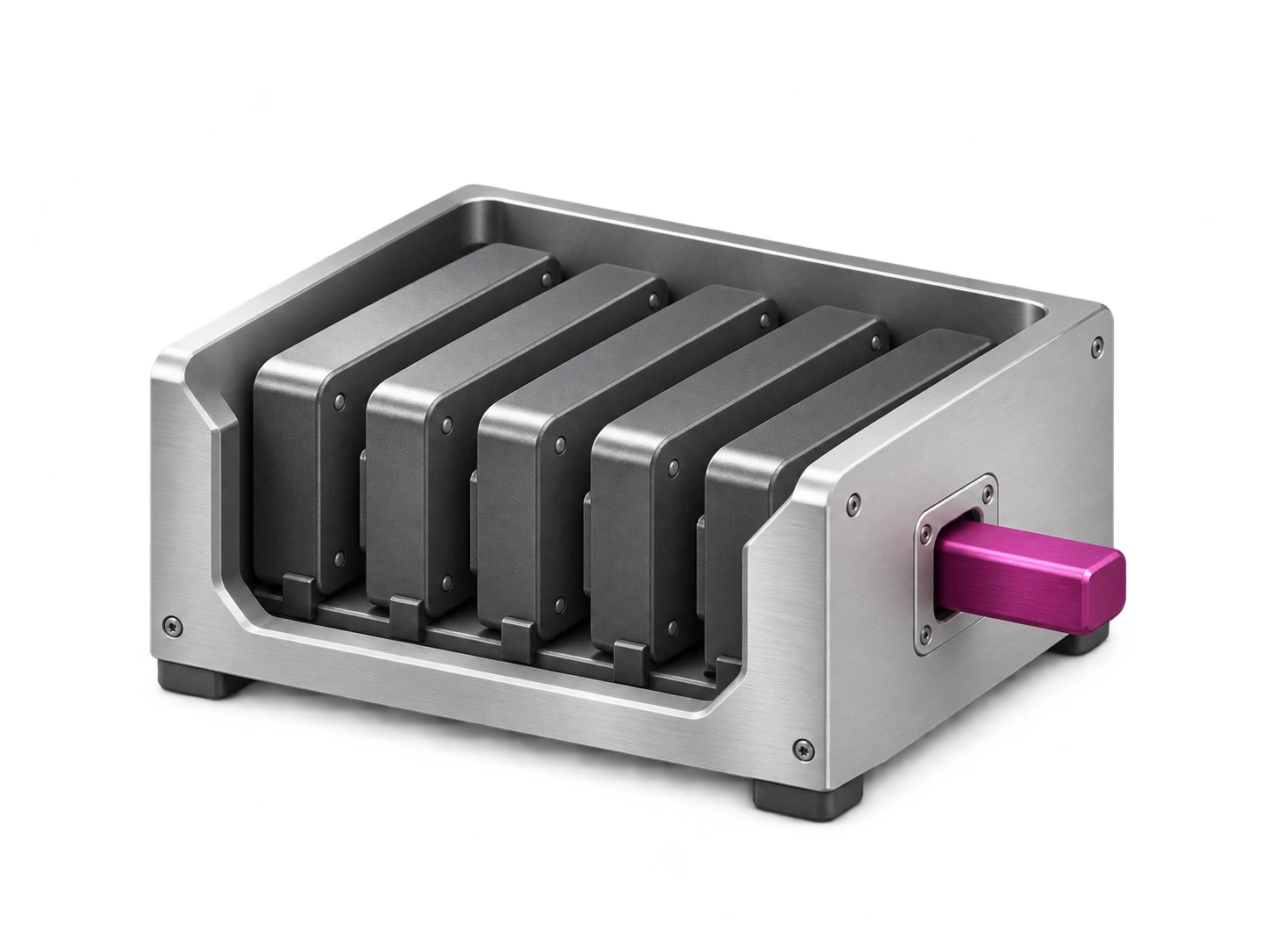
An open aluminum chassis surrounds graphite modules, with a single magenta connector at its boundary.
Deployment / Inside your environmentConceptual model
An authorised paymentNamed-resource grant · enforce
Your trust boundary
Settlement agentRequests authority
RotaGrantChecks the grant
Payment serviceVerifies the capability
Decision record
Evidence streamSequenced records · Signed Merkle batches
Optional external anchorOnly a Merkle root crosses this boundary.
The protected service validates the token offline. A refusal at the decision engine ends the payment path and still produces a decision record when evidence capture is available.

Enforcement

What an allow decision buys.

Authority and delegation

Grant

A named human sets the limits.

A grant binds an agent to an owner, permitted actions, a validity window and a budget. Delegating to a specialist can narrow those limits. Spending on a child also consumes the allowance of every ancestor, so two specialists share the same remaining funds.

Decision

Policy and accounting have different jobs.

Cedar evaluates the rule for this particular action. Postgres holds the running totals across grants. A policy refusal happens before a budget debit. The decision includes which checks ran and where evaluation stopped.

Execution

The payment service checks the signature.

On an allowed request for a named resource, RotaGrant issues a short-lived capability bound to the resource, action and amount. The protected service rejects requests without sufficient authority, including direct calls from the agent. This requires a verifier at that service.

The amount is held until the service reports settlement or release. Settlement consumes the budget, release restores it, and an unresolved hold expires with a finding.
Evidence

What can an auditor verify?

Each mechanism answers a different question about the same decision.

Sequence

Is a record missing?

Records have increasing sequence numbers within a stream. A gap exposes an omitted entry between records.

Merkle proof

Was this decision in the sealed batch?

An inclusion proof connects one record to a signed batch root. An auditor can check that record without seeing other agents’ activity.

External anchor

Can another party witness the root?

A deployment can publish the batch root to an external witness. In airgapped mode the record can still be sealed and verified locally, but the external witness is unavailable.

Trust the key separately.

A successful signature check proves the signed bytes are intact. To establish the signer’s identity, obtain its public key independently. Whether the source accurately reported an event is a separate question.

Verify a real refusal

Deployment

In your environment.

One tenant. Your network and keys.

Run RotaGrant in your VPC, on premises or airgapped. Workspace-scoped Postgres tables apply row-level security. The decision engine calls no model. Choose deployment-held, KMS, HSM or external key custody. Each signed artefact identifies its custody.

Compare deployment options

Two distinct failure paths.

Enforcement fails closed. If the control plane cannot grant authority, an action requiring it cannot proceed. Evidence capture fails open, so a recording fault alone does not take down your application. The design gives operators different failure signals to investigate.

Read the architecture reference

Build with RotaGrant

Wire in one governed action.